Choosing Tile and Grout for a Shower That Faces Riverside Hard Water
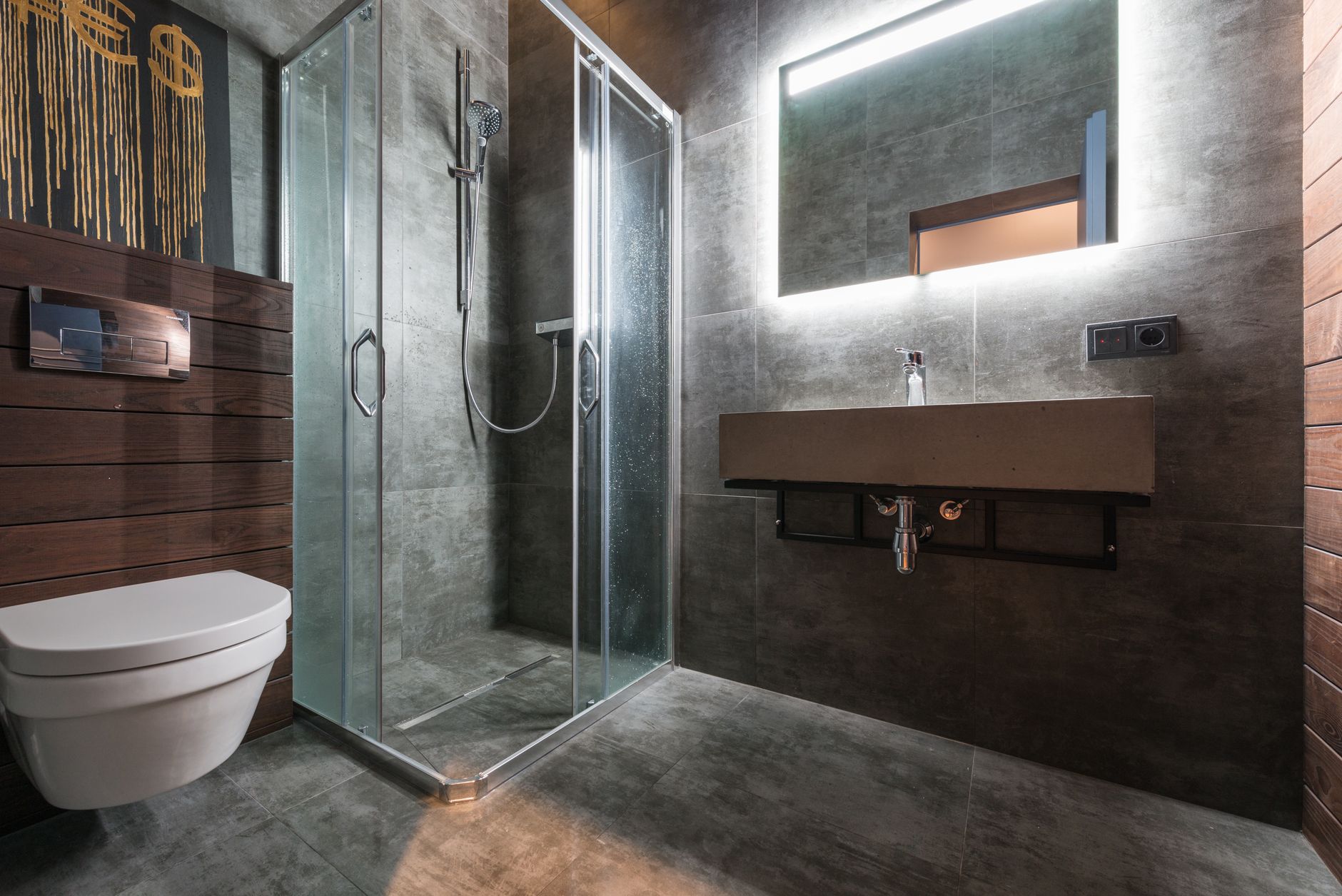
Why does hard water change how a Riverside shower should be tiled?
Water in the Inland Empire carries a lot of dissolved minerals, and anyone who has scraped a white crust off a glass shower door in Riverside knows it. That crust is calcium and other salts left behind when the water evaporates. In a shower, the same minerals settle into every low spot on the wall and floor, and the first place they collect is the grout joint. A tile choice that looks fine in a showroom can turn into a weekly scrubbing job a year later, and the cause is almost always the surface and the number of joints rather than any defect in the work.
The decision comes down to three things: how much grout line the design creates, how porous the tile and the grout are, and how the surface handles being wet most mornings. Everything else, color, size, pattern, is taste. This article walks through those three, starting with the tile body and ending with the grout, because the grout is where most showers in older Riverside houses show their age first.
What kinds of tile suit a shower?
Porcelain, ceramic and natural stone all get used in showers around Riverside County, and each behaves differently once it has been wet for ten years. The table below compares the common choices on the points that matter for a wet room.
| Tile type | Water absorption | Grout lines | Upkeep in hard water |
|---|---|---|---|
| Porcelain | Very low, dense body | Few if large format | Wipes clean, minerals sit on the surface |
| Glazed ceramic | Low to moderate, glaze protects the face | Moderate | Easy until the glaze wears at edges |
| Subway tile | Depends on the body, usually ceramic | Many, short joints | More scrubbing because of the joint count |
| Mosaic | Varies by material | Very many | Hardest to keep clean on walls, useful on a shower floor for grip |
| Natural stone | Higher, needs sealing | Moderate | Mineral staining shows, sealer wears off |
Porcelain is the usual answer for a shower in a house that sees a lot of hard water, since the body barely absorbs anything and the face stays smooth. Glazed ceramic wall tile is fine on walls that never take a direct spray. Stone looks warm but asks for a sealer that has to be renewed, and in a house where nobody will renew it, the stone slowly takes up the minerals and the soap.
How does tile size affect the work behind the wall?
Large format porcelain has fewer joints, which helps with cleaning, but it asks more of the substrate. A big sheet of tile cannot follow a wavy wall the way a small tile can. Older Riverside homes near the Mission Inn and along the streets below Mount Rubidoux often have plaster walls that look flat to the eye and are not, and once the plaster is gone and the studs are exposed, the studs themselves can be bowed or twisted. A crew checks the wall with a long straightedge before cement board goes up, and shims or planes the studs where the face would otherwise wander.
A cement board wall that is flat within a small tolerance lets large tile lie without lippage, which is the term for one tile edge sitting proud of its neighbor. A wall that was not flattened shows lippage as a line of shadows once the bathroom lights come on. Small tile and mosaic hide a lot of that, which is one reason they were common on older walls, and it is also why they need so much more grout.
The shower floor is a separate question. A floor that has to slope toward a center drain wants small tile or mosaic, because a large tile cannot bend into a cone. A linear drain along one wall changes that, since the slope runs in a single direction and a larger tile can follow it. This is why the drain type is picked before the floor tile, not after.
What is the difference between grout types?
Grout fills the joints and also takes a lot of abuse. The common types in a shower are cement based grout, epoxy grout and a premixed urethane style, and the differences are about how they cure and what they resist.
- Cement based grout is mixed with water, sets hard and is slightly porous. It comes in sanded and unsanded forms, and sanded grout suits the wider joints on floors. It should be sealed after it cures, and the sealer needs renewing as time passes.
- Epoxy grout is a two part resin that does not absorb water and resists staining from soap and minerals. It sets faster than cement grout and is harder to clean off the tile face during installation, so it takes a practiced hand.
- Premixed urethane style grout comes ready to use and stays flexible, which helps in a room where the tile and the framing move at different rates.
Whichever type goes in, the grout color matters more than people expect. A mid gray hides mineral film far better than white, and a grout close to the tile color makes the joints disappear visually, so a little staining does not show. White grout against dark tile is the combination that looks dirty the fastest.
Why do the corners get caulk and not grout?
Where two planes meet, such as the wall to the floor, the wall to the wall and the tile to the tub or shower pan, a rigid grout joint will crack, because those planes move slightly with temperature and with the load on the floor. These joints get a flexible sealant, normally a silicone caulk matched to the grout color, and it goes in after the grout has cured. The movement joint at the base of the wall is the one most often skipped by mistake. When it is grouted solid, a hairline crack appears within a season, and water finds that crack on the way to the cement board.
Caulk is a maintenance item. A bead that has pulled away or turned dark at the edge is cut out and replaced, which takes a short afternoon and prevents most of the leaks that get blamed on the waterproofing.
How do the layers behind the tile fit in?
Tile and grout are the surface, and underneath them sit the layers that keep the building dry: the waterproofing membrane, the cement board and the shower pan. A shower pan that was flood tested and a membrane that was applied to the right thickness mean the tile can do its job, which is to look good and shed most of the water. The tile does not have to be perfect at stopping water, and no grout line is completely watertight, which is why the membrane exists.
The thinset that bonds the tile to the board has its own demands. In the dry heat of a Riverside summer, a thinset bed can skin over in minutes if the room is hot and the air is moving. Tile pressed into a skinned bed bonds poorly, and the failure shows up months later as a hollow sound under a tap. Setters in the Inland Empire often keep the bathroom closed, wet the cement board lightly before setting, and spread only as much thinset as they can cover quickly. After the tile is placed, a back and forth tap test finds hollow spots while the bed is still workable.
Which choices are about looks and which are about function?
Color, pattern and finish are free to vary, and that is where a bathroom gets its personality. Function sits in a smaller set of choices: a dense, low absorption tile on the wet surfaces, as few joints as the walls will allow, a grout that resists staining, flexible sealant in the movement joints, and a slope that drains. A bathroom that gets those right looks the same in ten years as it did the week it was finished, and one that does not usually shows the problem first in the grout and the caulk, long before anything behind the wall fails.
Hard water will always leave a film, and a daily squeegee on the glass and the lower tile is the simplest defense. The design decides how much work that film creates, and the fewer the joints and the denser the tile, the less there is to do.